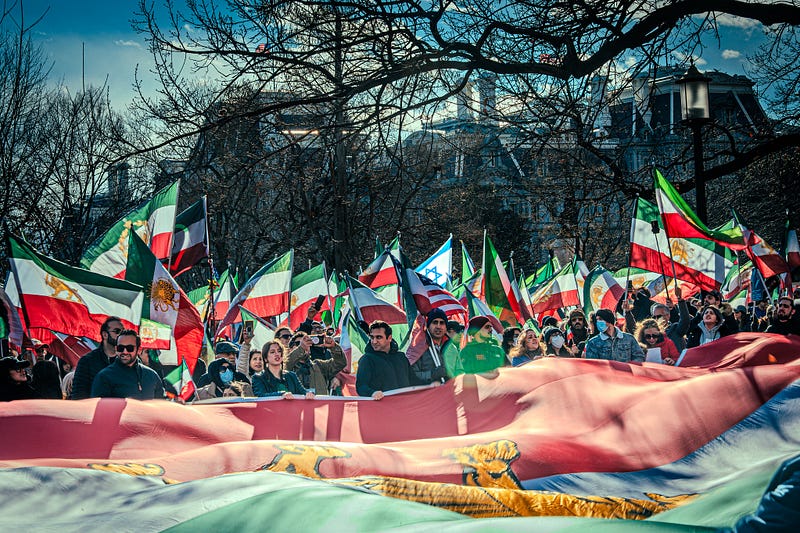
With an estimated 30,000 protesters killed and the Ayatollah reportedly in hiding, the dream of freedom in Iran refuses to die.
Most Americans have become suspicious of news networks in recent years. Trust has plummeted for major media news organizations since long before the Mueller Investigation was a complete bust, the Hunter Biden laptop turned out to be real, and the pandemic might have originated in a bioweapons research lab at the epicenter of the outbreak after all.
We have grown weary of nameless, faceless (though often not agenda-less) “people familiar with the matter,” “people who aren’t authorized to speak publicly,” and the ever-popular, nebulous “sources say.”
Often, the breathless news reports they produce have resulted in big fat nothingburgers.
So it’s hard to immediately credit a news report emanating from anywhere. In the rush to press, with all the pressures of the 24-hour news cycle, more information often becomes available 24 or even 48 hours after the original front-page story was run.
Corrections, as always, are issued on page 86.
But according to Reuters, as of January 30, 2026, President Donald Trump is still weighing strikes against Iran.
The U.S. wants a regime change in Iran, Reuters reports, though Trump hasn’t reached a final decision.
Many political analysts, human rights organizations, and Iranians all around the world were hopeful a few weeks ago when it seemed — for a moment — that an Iranian freedom movement might topple the murderous regime in Iran.
And while that didn’t happen, the lengths Iran’s rulers went to in order to quell the protests suggest the regime is cornered, terrified, and desperate.
U.S. strikes aside, no government that is so detested by the people it presumes to rule is ever safe.
Iran is in the middle of a fast-moving internal crisis: large-scale unrest that began in late December has collided with an exceptionally violent state crackdown, an extended internet blackout, and rising international pressure.
What happens now?
Regime pressure may work — for now. Protests may have diminished due to mass arrests, fear of death, and exhaustion — but anger is still alive and well. And underground. This can “stabilize” the streets without solving the legitimacy/economic crisis, setting up another eruption.
The Iranian people are undoubtably already finding other ways to fight back. If labor stoppages spread (oil/gas, transport, bazaars, public sector), the regime’s coercive advantage will matter less than its ability to keep the economy functioning.
A split between security factions, clerical power centers, or economic networks could produce anything from a hardline consolidation to a “palace” reshuffle. One reason the internet shutdown is a wild card: even regime-aligned business interests reportedly dislike it because it damages commerce.
Iran’s regime could even be moved to reform.
The regime seeks survival above all things. To hold onto power, the Iranian government might offer concessions, prisoner releases, or controlled openings. Parallel signals about “readiness for talks” suggest Tehran wants options, so it’s at least possible.
External factors could alter the situation as well.
As far as U.S. military action, it’s tricky. Limited strikes could weaken the regime’s repressive capacity — or unify nationalist sentiment behind it.
The world is watching closely. Will the regime lift the unpopular internet blackouts? Or double down?
Diplomatic negotiations may help the stalemate — or inflame tensions.
But for Iranians, the hope of peace, the dream of freedom, and the spirit of democracy are all still alive and well. The Iranian regime hasn’t managed to snuff that out after decades of iron-fisted rule.
And the Iranian people don’t seem to be about to give those things up now.
(Contributing writer, Brooke Bell)